This paper explains EM application in a large-scale soybean farm and lists the effects. It shows a cost-performance per ha to apply EM Technology in soybean farming. The effects (e.g., improving the soil, preventing the seed from having pathogens) are included many enough to support the value of applying the technology.
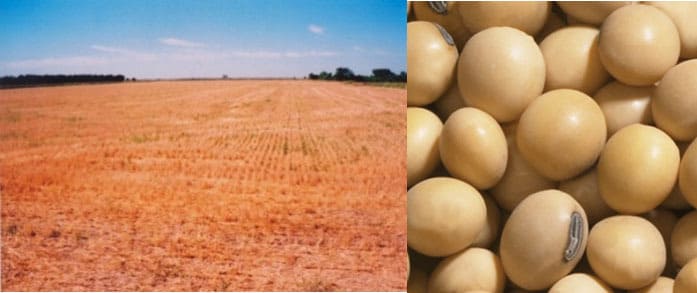
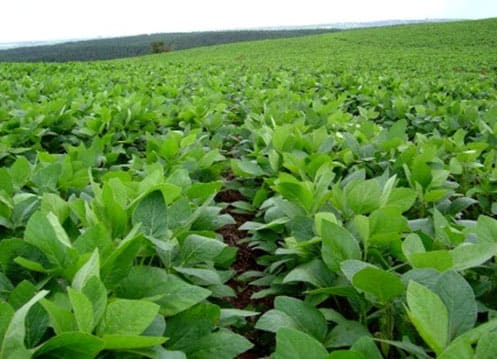
This is a soybean farm applying EM. The application into soybean stubble is as follows:
5-10L of AEM/ha (could be applied in combination with the herbicide glyphosate)
EM Application in seed inoculation:
Replace the inoculation water with AEM (3L/1000kg of seeds)
EM Foliar Application:
During pre-flowering, flowering and grain filling 5-10L of AEM/ha
EM5 Application:
AEM+alcohol+vinegar+molasses+aromatic herbs (2-5L/ha)
| EM Application | Doses EM (L) | Cost of AEM |
| U$S | ||
| Seed inoculation | 0.25 | 0.48 |
| Application in stubble | 10 | 19.05 |
| Reduction of herbicide | 4 | – |
| 2 foliar applications | 10 | 19.05 |
| Total | 38.57 |

Improve the biological capacity of the soil while suppressing the pathogens
(Increase the beneficial microflora: Actinomycete, Enterobacter spp, Trichoderma spp, Penicillum spp. Suppress Pythium, Phytophthora, Verticillium, Thielaviopsis spp, Fusarium spp & nematodes)
Effective in fixing the N during using fertilizer
Inoculation: improve the early nodulation, increase the weight and number of nodules
Promote the germination of seeds
Protect seeds against pathogens (eg. Macrophomina, Rhizoctonia, Sclerotium, etc.)
Foliar application: protect against disease and increase the metabolic activity (photosynthesis
and metabolism of N). Increase content of proteins and oil.
Reduce the use of herbicide doses in 30% (replace by EM in 30%)
2016.7.5 Updated

EM Research Organization, Inc.|
All Rights Reserved. 2025 © EM Research Organization