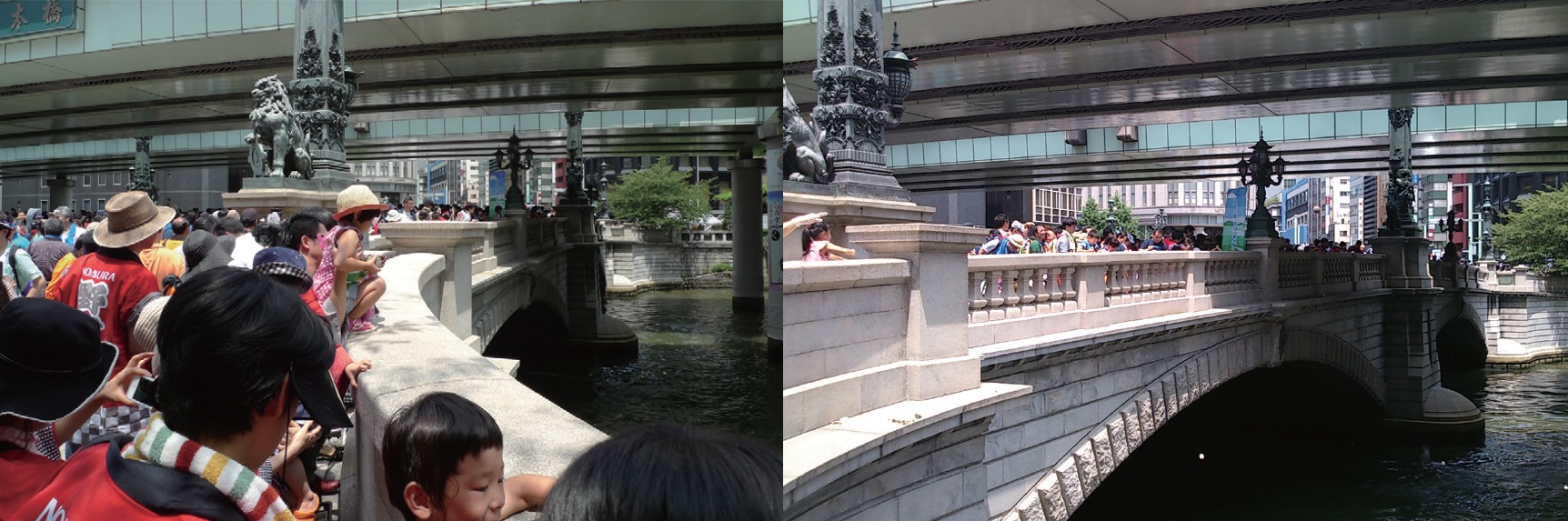
The project that started in 2005 for Nihonbashi River, located in Japan and which separates from the Kanda River near JR Suidobashi station, had great results. As a consequence, the project was extended to the Kanda River and even the moat.
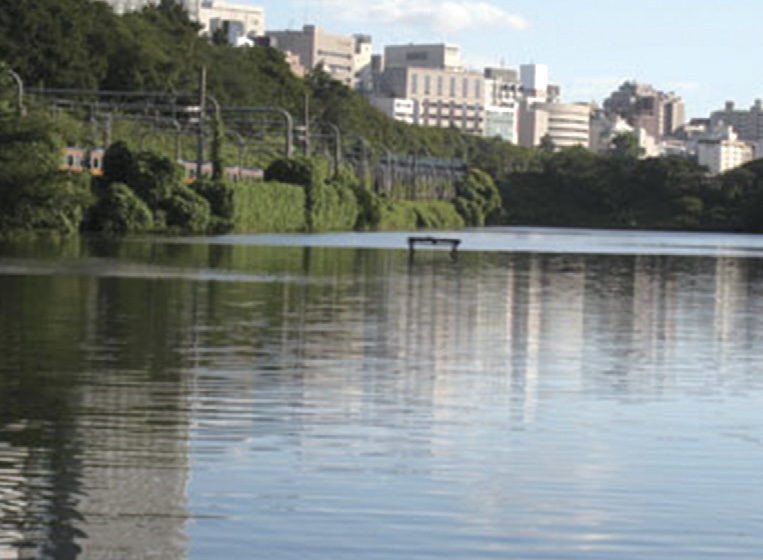
The Edo Castle outer moat and Ushigome moat, where the surface of the water is beautiful. 20.000 to 30.000 EM Bokashi fermented Mudballs have been applied every year
In July 2005, local residents began using EM soap and throwing EM Mudballs into the river as part of the water purification activities, and in December 2006, 10tons of Activated EM began to be applied every week into the Nihonbashi River. These activities expanded from the purification of the Nihonbashi River to the area upstream in the Kanda River, as well as cleanup activities in the outer moat, have resulted in a remarkable recovery for the ecosystem.
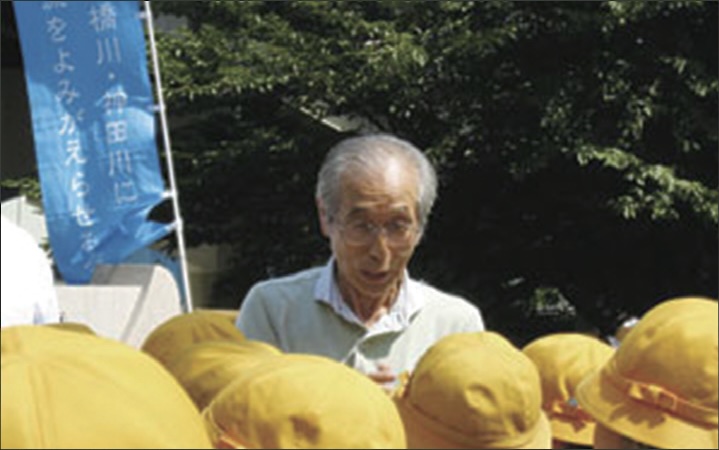
Mr. Isamu Hayashi (Chairman of the Revive Clean Water in Nihonbashi River and Kanda River Group) speaking to local elementary school children who participated in EM Bokashi fermented Mudball project
In 2007, Revive Clean Water in Nihonbashi River and Kanda River Group started introducing EM Mudballs in the Ushigome moat (at Iidabashi), one of the three outer moats that are the source of the scum.
They have continued putting in a large number of EM Mudballs in the moat, a total of 36.000 Mudballs over four times in the same year, a total of 30.000 Mudballs in 2008, 20.000 in 2007, and 20.000 in 2010 (for more information visit their website, Japanese only).
In June 2008, this association also started to input 2tons of Activated EM every week into the Ichigaya moat, apart from the 10tons of EM culturing apparatus at Nishi-Kanda.
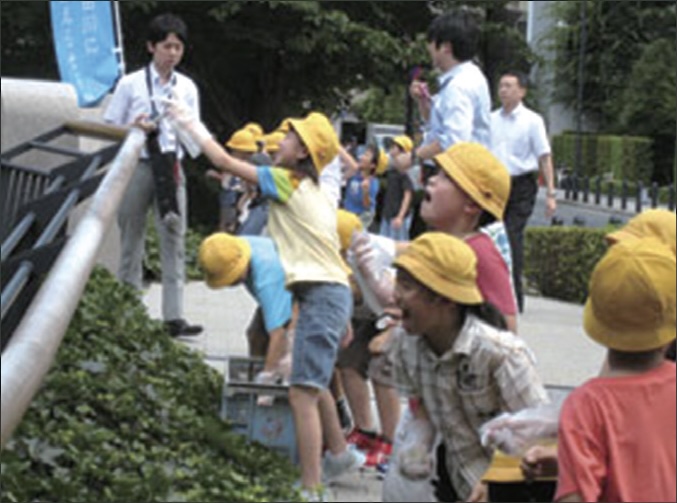
Aiai Bridge: Fujimidai Elementary School children are throwing EM Bokashi fermented Mudballs in the stream of the river
The Revive Clean Water in Nihonbashi River and Kanda River Group in cooperation with the government of Chiyoda-ku, started a river cleanup activity called the “Bridge Caravan” in June 2008. Designed for the children of each of the local elementary schools, it has become an annual event.
The event was planned with the hope that local children get more familiar with the bridges over the Kanda River and Nihonbashi River as well as the rivers themselves and to encourage them to nurture this new local tradition through their experiences participating in the cleanup activity.Some children did not even notice that the Nihonbashi River and the Kanda River existed, but through this experience of participating in the Caravan, they now look down at the water past the vertical concrete overpasses and say “I wonder if the water has gotten cleaner” and “I wonder if the number of fish has increased”.
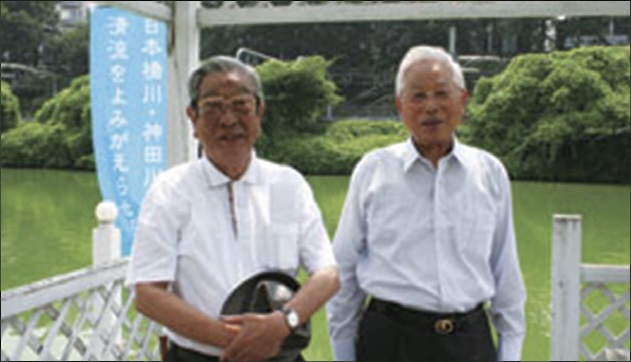
Mr. Minoru Otsuka (on the right) whose lifework is reviving beautiful nature and scenery
In addition, he has donated two battery-powered Eco-boats to Chiyoda District, saying his desire is for local people and children to enjoy the scenery of the rivers and become interested in maintaining them, enhancing the landscape.
Ms. Yuko Hanyu, owner of the Canal Café in Ushigome moat, is an active participant of the Revive Clean Water in Nihonbashi River and Kanda River Group’s water purification activities.
In 2008, she was convinced that the water quality in the moat was improving and decided to begin a “revival of fireflies”, a long –cherished desire of hers. In summer 2009, a single firefly was seen in a floating island made in restaurant, this was featured on the media.
Since 2010, during the period from mid-June to July, people could enjoy restaurants while watching fireflies in this area.
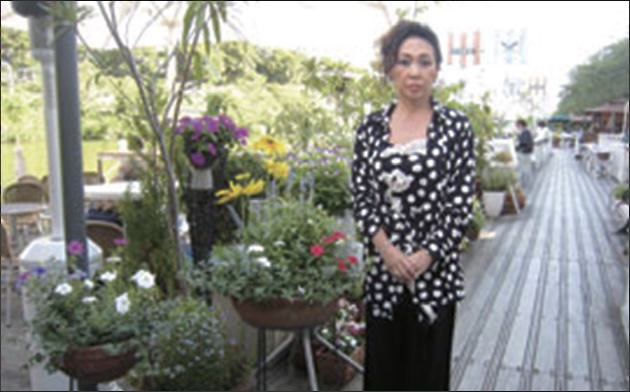
Ms. Yuko Hanyu, who realized a revival of fireflies
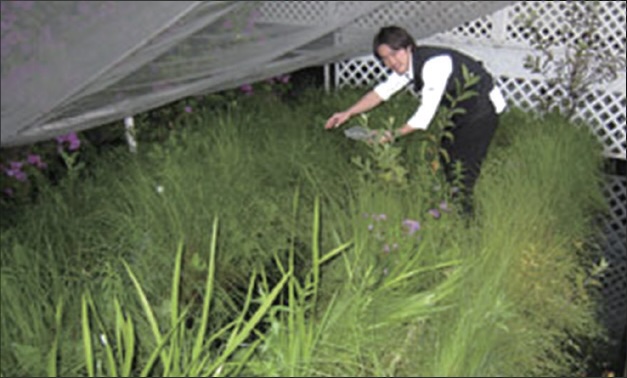
The fireflies in Canal Café
In early May of 2010, the bottom of the river near the café pier was clearly visible, for the first shrimp were observed swimming and an excited chef scooped up the shrimp, making shrimp tempura to taste it.
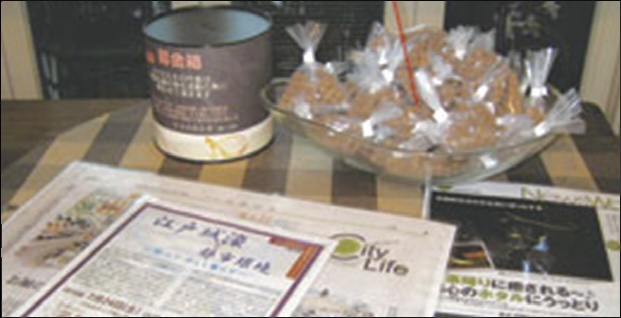
Eco collection box: fish food and eco bags, profit goes to environmental cleanup groups
At this restaurant, they sell fish food for the carp and eco-bags in the store, trying to get costumers interested in water purification and environmental issues. They donate the proceeds to environmental activist groups. More than 15.000 people have supported these activities and the number is increasing.
"Draw some water and if it smells bad, then is no good"
"Leave the water for a couple of days, if it smells bad, then is no good"
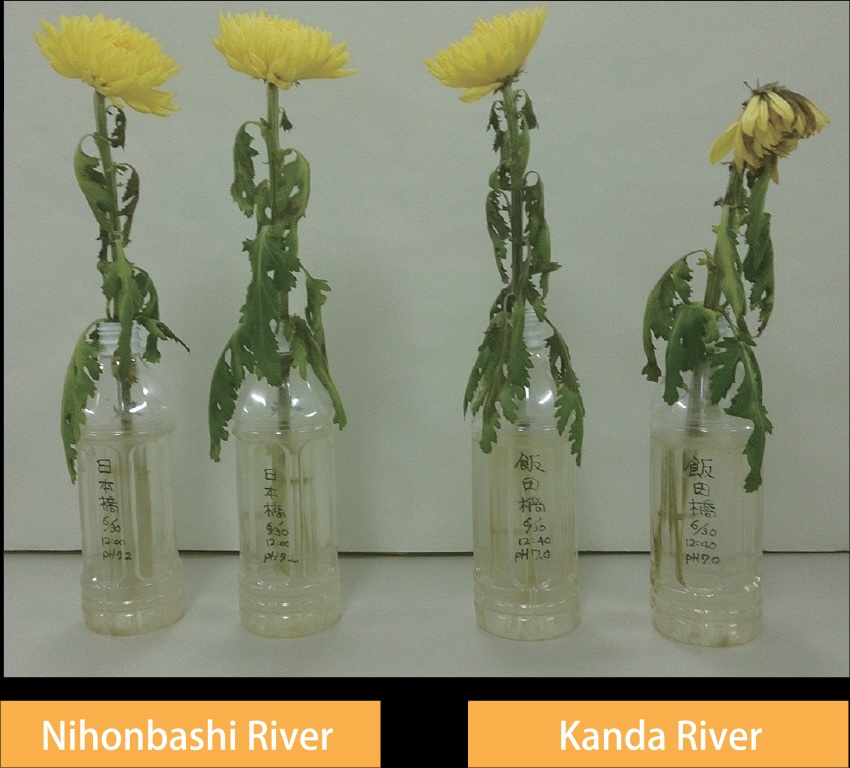
Professor Higa himself tried the method of determining the water quality. Using the water of the river right beneath Nihonbashi bridge and the water of the Kanda River near the Kanda Employment Security Office where there seems to be little influence of EM application, he put a stem of chrysanthemum in each bottle. Ten days later, there is a distinct difference between them. In the bottom sediment survey, in the vicinity of Nihonbashi it smells less, while the water in Kanda River from the front of Kanda Employment Security Office has a strong odor.
For more details on this case, read #19 Environmental Forum “Revive the Nihonbashi River!”
2019.8.19 Updated

EM Research Organization, Inc.|
All Rights Reserved. 2025 © EM Research Organization