No tillage farming system was implemented in 1970 in Parana state.
Mr. Uemura introduced EM Technology to fight disease and find an alternative to yield decreasing due to soil erosion.
Mr. Uemura family started with soybean cultivation applying conventional farming.
However, they realized that yield was decreasing due to soil erosion while cost for agricultural inputs were raising, making unfeasible farming for them.
Therefore, they implemented the no tillage system in the late of 1970.
Farm Scale: 2000ha
Products: wheat, soybean, bean, corn
-Most critically disease is white mold
-Resistance against herbicides and insecticide what cause production decrease and high cost expenses
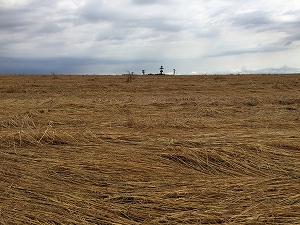
-Dry winter with almost no rain in 2016
-Abundant rain in 2017
-High expenses in agricultural inputs
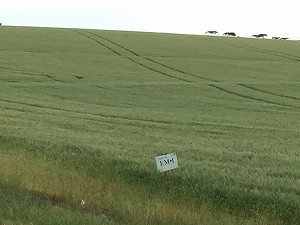
They use Activated EM・1 (AEM) for the crops f wheat, soybean, bean and corn alternating crops per season.
Usually, they apply AEM directly to soil.
After harvest, they leave crop residue on the land to protect the soil from the rain and then, before planting, they spray AEM again to promote decomposition process.
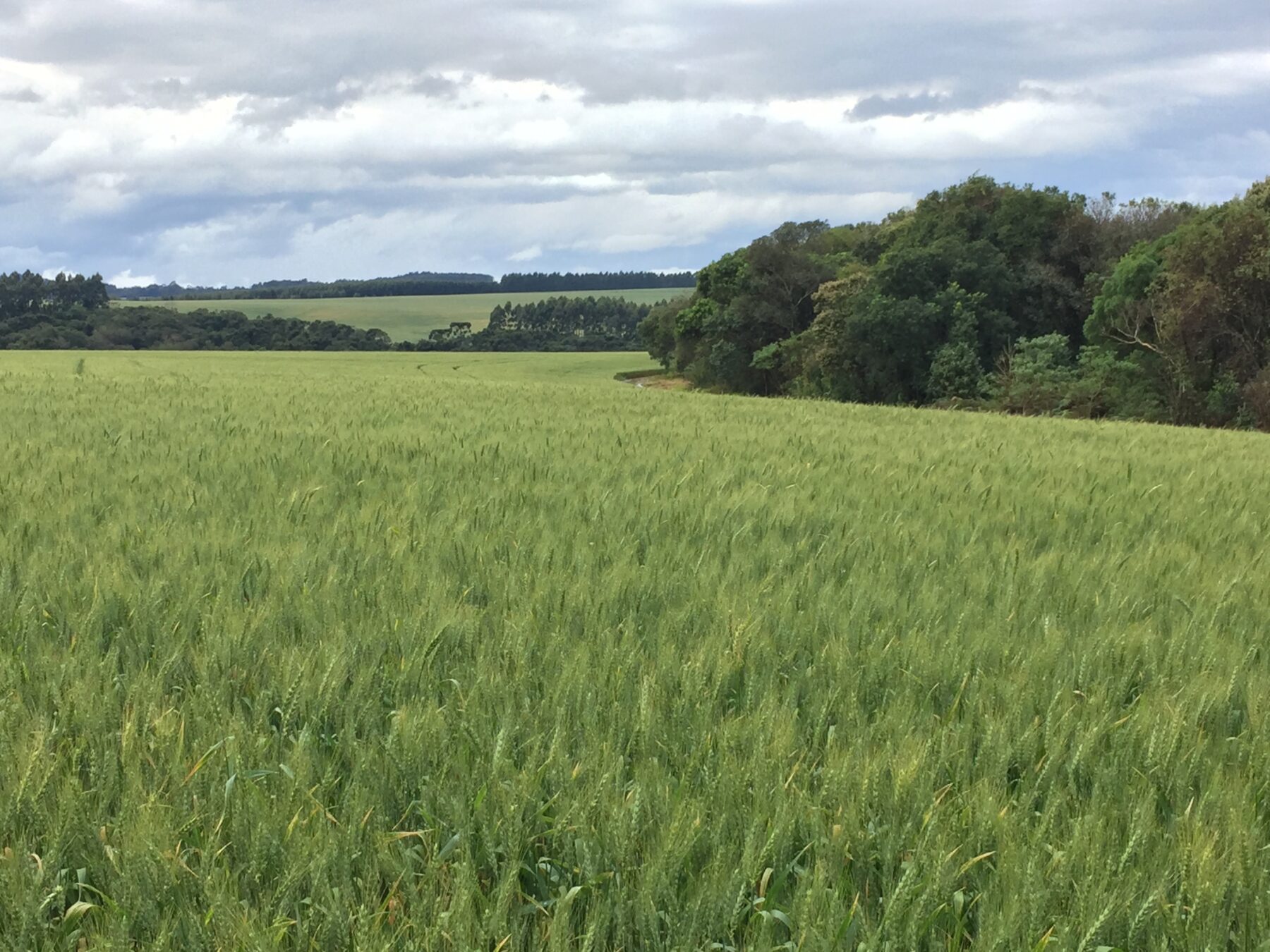
1. During winter of 2016 they do not have much rain so neighboring farmers had production decrease and poor quality. However, Mr. Uemura’s wheat has the same production and high quality.
2. Mr. Uemura was awarded for growing the best quality wheat in the region.
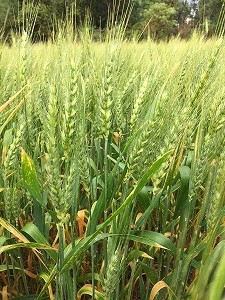
3. Wheat grow homogeneously.
4. Improve of roots helped plants to be resistant against drought and disease.
6. Using EM Technology in soil, promoted soil recovery and loosen hard soil of this land.
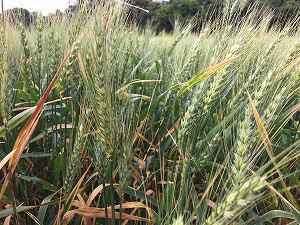
Wheat awarded as the best quality in the region
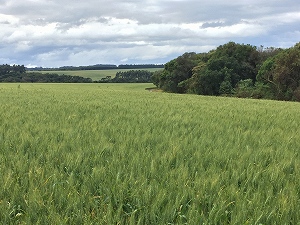
Wheat grow homogeneously
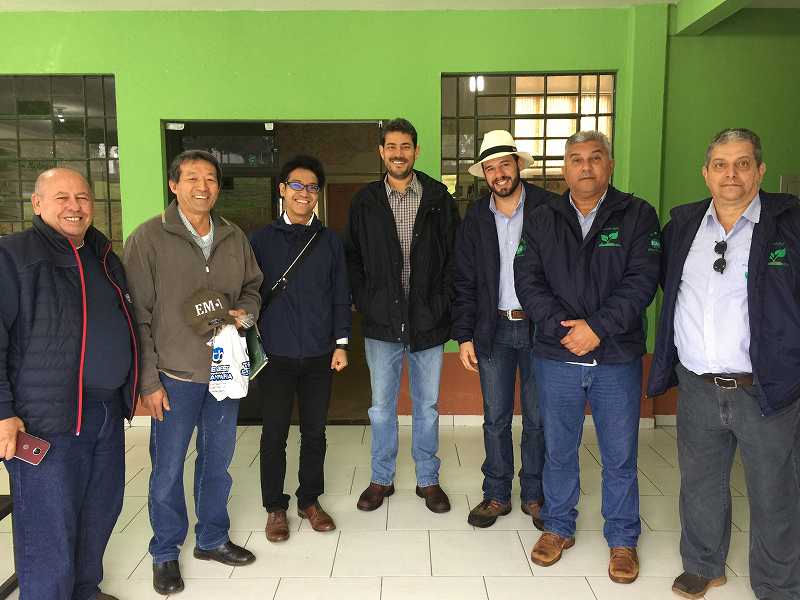
Mr. Uemura, second from left along with EM partner and resellers
2018.3.7 Updated

EM Research Organization, Inc.|
All Rights Reserved. 2025 © EM Research Organization